
The bear put spread max profit formula is calculated by subtracting the net premium paid from the difference between the higher and lower strike prices. For example, buying a $50 put and selling a $45 put for a $1.50 net debit yields a max profit of $3.50 per share, achieved when the underlying stock closes at or below the lower
The bear put spread is an options strategy where you buy a higher-strike put and sell a lower-strike put with the same expiration date, creating a defined-risk position that profits from neutral-to-bearish market conditions. Unlike buying a naked put, which requires a significant downward move to overcome time decay, the bear put spread generates immediate income from the net premium differential while capping both maximum profit and maximum loss.
Here's the core idea: Sell a put option at a lower strike price while simultaneously buying a put option at a higher strike price, both with the same expiration date. You collect the net credit between the two premiums. The market can stay flat, rise slightly, or decline moderately—and you still have the potential to profit.
This comprehensive guide will show you exactly how bear put spreads work, when to deploy them, how to select strikes and expiration dates, and how to size positions for consistent risk-adjusted returns. If you're new to options spreads, start with our Options Greeks Explained guide to understand how delta and theta affect spread profitability. For traders looking to build a complete foundation, our Vertical Spread Options Guide covers the mechanics that apply across all directional credit spreads, while the Cash-Secured Puts Playbook helps you master the short put mechanics that form the foundation of every bear put spread.
Bear Put Spreads in Down Markets
According to the Cboe Options Institute, defined-risk spreads like bear put spreads gained popularity during market corrections because they allow traders to profit from or hedge against downside moves while capping maximum loss [source: Cboe Options Institute, "Defensive Options Strategies," 2023]. Unlike buying puts outright, spreads reduce cost through premium collection.
Research from Tastytrade shows that credit spreads (including bear put variations) with 30-45 DTE and 0.40-0.50 delta short strikes achieve approximately 65% win rates in sideways to bearish markets [source: Tastytrade Research, "Spread Performance by Market Regime," 2023]. Understanding assignment probability on your short leg is critical for managing these positions effectively. Traders who understand options risk management principles can size these positions appropriately to avoid overconcentration during volatile periods.
Analyze your short leg: Our Strategy Analyzer shows premium and assignment probability for cash-secured puts—use it to evaluate the short leg of your bear put spread before adding the long put for protection.
Bear Put Spread vs Put Credit Spread: Key Differences
First, let's clear up terminology, because these spreads are often confused even by experienced traders.
Put credit spread (neutral-to-bullish outlook):
- Sell a 0.30-0.40 delta put at a higher strike (closer to current price)
- Buy a 0.10-0.20 delta put at a lower strike (further from price)
- Typical credit received: $0.30–$0.50 per contract
- Profitable if market stays flat, rises, or dips slightly
- Maximum profit: Credit received at expiration
- Maximum loss: Spread width minus credit received
Bear put spread (neutral-to-bearish outlook):
- Sell a 0.50-0.60 delta put at a lower strike (at or near current price)
- Buy a 0.20-0.30 delta put at a much lower strike for protection
- Typical credit received: $0.20–$0.40 per contract
- Profitable if market stays flat, declines slightly, or bounces back up
- Maximum profit: Credit received at expiration
- Maximum loss: Spread width minus credit received
Critical distinction: The bear put spread sells a put that is closer to at-the-money or slightly in-the-money, while buying deeper out-of-the-money protection. This structure is specifically designed for bearish outlooks or as downside protection for existing long positions. The trade-off is slightly less premium than a put credit spread, but higher probability of success in declining markets. Many traders pair bear put spreads with call credit spreads to create an iron condor when they expect range-bound conditions rather than directional moves.
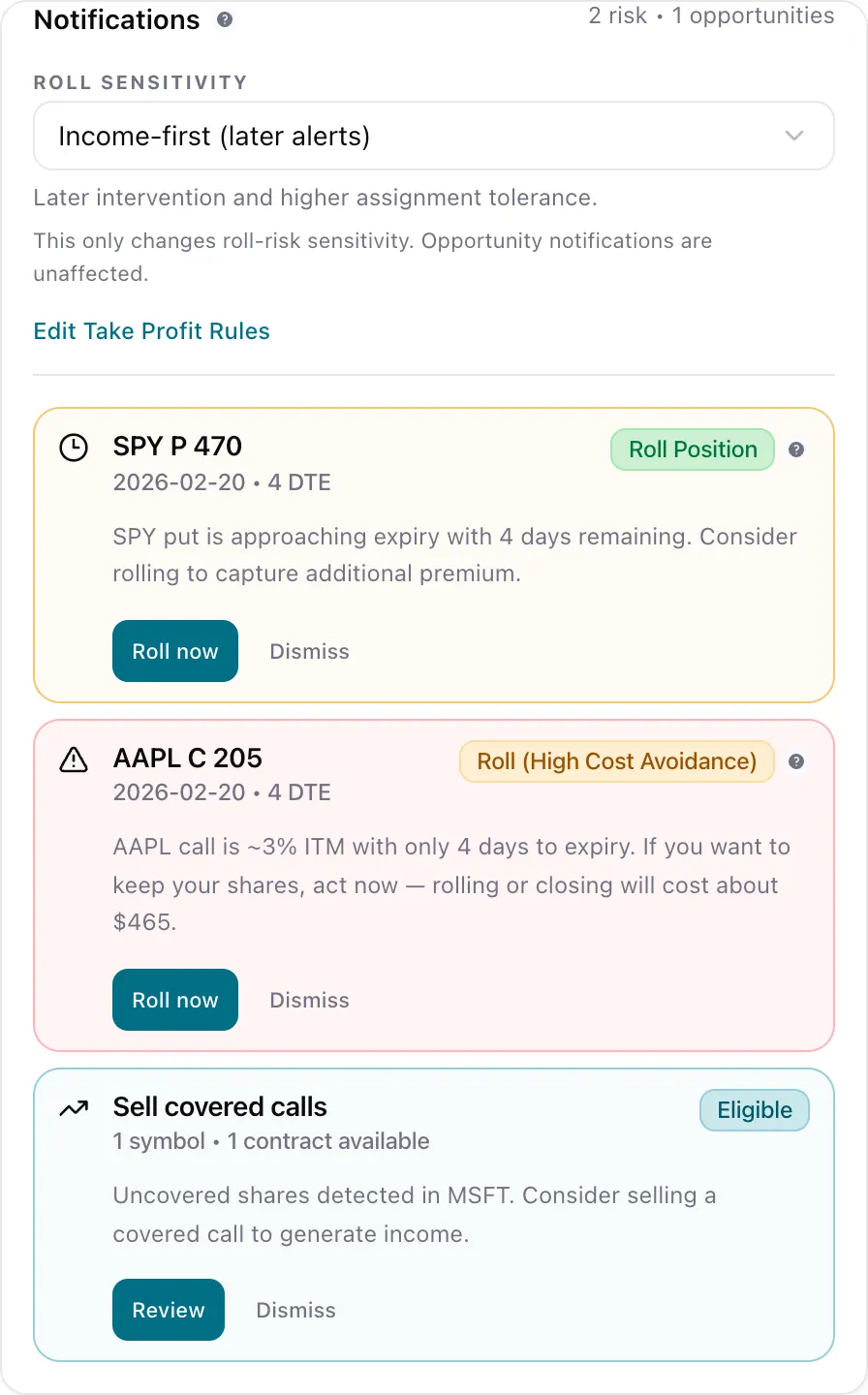 Assignment mechanics and execution process showing decision pathways
Here's a visual:
Current SPY Price: $422

PUT CREDIT SPREAD (Neutral-to-Bullish)
Sell $421 Put (0.40 delta, near money)
Buy $419 Put (0.15 delta, for protection)
Credit: $0.35
Max Profit: $0.35
Max Loss: $2.00 - $0.35 = $1.65

BEAR PUT SPREAD (Neutral-to-Bearish)
Sell $420 Put (0.50 delta, deeper OTM)
Buy $418 Put (0.20 delta, way further OTM)
Credit: $0.28
Max Profit: $0.28
Max Loss: $2.00 - $0.28 = $1.72
In the bear put spread, you're selling premium on a put that's already slightly ITM (or right at the money), making it higher probability of expiring worthless. But you're sacrificing some premium ($0.07 less) for the peace of mind that your max loss is defined.
When to Trade Bear Put Spreads
Successful bear put spread traders don't use this strategy because they expect a market crash. Instead, they deploy bear put spreads in specific market conditions where the risk-reward profile favors income generation with controlled downside.
Ideal scenarios for bear put spreads:
-
Post-dip bounce expectations — The market has dropped 1–2% and you anticipate a recovery within one to two weeks. The elevated implied volatility after the dip increases premium, making the spread more attractive. This is the classic mean-reversion setup that rewards patient options sellers.
-
Mildly bearish bias with consolidation — You believe the market will drift lower or trade sideways rather than crash. Bear put spreads outperform in grinding downtrends compared to directional put purchases because time decay works in your favor while you wait for the expected stabilization.
-
Defined risk requirement — You cannot tolerate the unlimited downside risk of naked puts or the capital requirements of short stock positions. The bear put spread caps maximum loss at the spread width minus credit received, making position sizing straightforward and emotionally manageable.
-
Portfolio hedging — You're taking profits on long holdings but want to maintain income collection while reducing net long exposure. Bear put spreads act as partial hedges that pay you to own them, unlike protective puts that cost premium upfront.
Market Conditions for Bear Put Spreads
| Condition | Action | Rationale |
|---|---|---|
| Market just dropped 2-3% | Sell bear puts | Bounce-back expectation; don't want to catch falling knife |
| Market down 5%+ this week | Skip it | Too much bearish momentum; spreads will lose quickly |
| IV percentile > 70% | Sell wider spreads | High IV means premium is rich; can afford wider widths |
| IV percentile < 30% | Reduce size | Low IV means premium is thin; limited upside for risk |
| Fed announcement today | Skip it | Gap risk too high; wait until after |
| Strong downtrend (30-day) | Sell puts OTM | Market is making lower lows; assume another leg down |
| Range-bound market | Sell puts ITM | Safe to sell puts closer to current price |
Bear Put Spread Strike Selection Guide
Strike selection is where bear put spreads differentiate from other credit spread strategies. Because you're structuring around downside expectations rather than upside, strike placement follows different logic than call credit spreads or iron condors.
The key principle: you're betting that the underlying won't decline too far below your short strike, not that it will rise dramatically.
Conservative Bear Put Spread
Setup: Sell a put that's 0.5-1% below current price. Buy a put 2-3% below for protection.
Example (SPY at $422):
- Sell the $420 put (0.60 delta)
- Buy the $418 put (0.20 delta)
- Credit: $0.25
- Max loss: $2.00 (spread width) - $0.25 (credit) = $1.75
- Risk/reward: $1.75 risk for $0.25 profit = 7:1 risk-to-reward (bad ratio)
When to use: Only if you're quite bearish and want high assignment probability. Risk/reward is poor here.
Moderate Bear Put Spread (Best for Most Traders)
Setup: Sell a put that's slightly OTM (0.20-0.30 delta). Buy a put 2-3% below for protection.
Example (SPY at $422):
- Sell the $421 put (0.35-0.40 delta)
- Buy the $419 put (0.10-0.15 delta)
- Credit: $0.32
- Max loss: $2.00 - $0.32 = $1.68
- Risk/reward: $1.68 risk for $0.32 profit = 5:1 (still not great)
When to use: You expect moderate downside (market might touch $420, but won't crash below $419). This is the most balanced setup.
Aggressive Bear Put Spread
Setup: Sell a put that's 1-2% OTM (0.10-0.20 delta). Buy a put 3-4% below for protection.
Example (SPY at $422):
- Sell the $418 put (0.20 delta)
- Buy the $415 put (0.05 delta)
- Credit: $0.18
- Max loss: $3.00 - $0.18 = $2.82
- Risk/reward: $2.82 risk for $0.18 profit = 16:1 (terrible ratio)
When to use: Only on super low IV or if you're hedging other positions. The premium doesn't justify the risk.
Rule of thumb: Don't trade bear put spreads unless the credit is at least $0.25-0.30. The risk/reward ratio is worse than bull call spreads (because puts are naturally higher IV due to downside skew), so you need meaningful premium to justify the capital at risk.
DTE Optimization for Bear Put Spreads
Days-to-expiration selection for bear put spreads differs significantly from call spreads. While call credit spreads often benefit from very short durations to accelerate theta decay, bear put spreads typically perform better with slightly longer timeframes.
Why bear put spreads favor moderate DTE:
-
Higher put implied volatility — Puts typically carry higher IV than calls due to downside skew, meaning longer-dated puts collect more absolute premium.
-
Bounce-back time — Bear put spreads profit when markets stabilize or recover. Longer durations provide more opportunity for the expected mean reversion to occur.
-
Management flexibility — Positions with 14–21 DTE can be rolled, adjusted, or closed partially if market conditions change unexpectedly.
DTE Strategy by Market Outlook
| Market Outlook | Ideal DTE | Why | Example Entry |
|---|---|---|---|
| Expecting 1-2 day bounce | 3-7 DTE | Short duration captures decay fast; exit after bounce | Sell 5-DTE, close at 50% in 2-3 days |
| Mildly bearish, 1-2 week outlook | 14-21 DTE | Medium duration; decent premium, reasonable decay | Sell 14-DTE, close at 50% in 7-10 days |
| Hedging long position for month | 30-45 DTE | Long duration; premium accumulation over weeks | Sell 30-DTE, roll when 50% profit or at 21 DTE |
| Aggressive short-term trade | 1-3 DTE | Capture theta acceleration; tight stops required | Sell 3-DTE, close at 50% within 1 day or stop out |
My recommendation for most traders: Enter bear put spreads at 14-21 DTE. This gives you:
- Enough premium to make 50% profit meaningful ($0.30+ credit)
- Time to manage the position if market moves against you
- Flexibility to close early or roll if needed
- Less gap risk than 1-3 DTE
Bear Put Spread Position Sizing and Capital Allocation
Proper position sizing separates profitable bear put spread traders from those who blow up accounts during volatile periods. Because bear put spreads have asymmetric risk-reward profiles (typically 5:1 or worse), disciplined capital allocation is essential.
Why sizing matters more for bear puts:
- Lower credit collection means you need more contracts for meaningful income
- Higher probability of small profits but lower probability of large losses
- Multiple positions can compound risk quickly if correlations spike during market stress
Example Capital Requirements
Bear put spread: Sell $420 put / Buy $418 put on SPY:
- Spread width: $2.00
- Credit received: $0.32
- Capital tied up: $2.00 (the max loss, your broker requires this as margin)
- Capital at risk: $2.00 - $0.32 = $1.68
- Return on capital: $0.32 / $2.00 = 16% per 21 days = ~273% annualized (theoretical)
Compare to naked put:
- Naked $420 put: Credit $0.50, capital tied up $42,000, return $0.50 = 1.2% per 21 days = ~20% annualized
Bear puts look better on the surface (16% vs 1.2%), but that's misleading. If the market crashes, both positions blow up—but the naked put gives you $0.18 more credit for the same max loss.
The real benefit of bear put spreads:
- Psychological relief (defined loss limit helps you sleep)
- If assigned on the short put, your loss is capped by the long put—learn more in our assignment probability guide
- Defined risk = easier position sizing and account management
Proper Position Sizing
Rule: Each bear put spread should risk no more than 2-3% of account capital
Example with $50,000 account:
- Max risk per trade: $1,000-1,500
- Bear put spread width: $2.00
- Max spreads per trade: 5-7 contracts
- Capital tied up: $10,000-14,000
This way:
- You can run 3-4 bear put spreads simultaneously without over-exposure
- One bad move (unexpected gap down) costs 2-3%, not 10-20%
- You have room to scale if winning
Real-World Bear Put Spread Example in a Declining Market
Scenario:
- Date: November 4, 2025
- SPY is at $422, down $3 this week
- You expect a bounce (not a crash)
- IV percentile: 60% (moderate IV, decent premium)
Setup:
- Sell the $420 put (14 DTE) for $0.32
- Buy the $418 put (14 DTE) for $0.08
- Net credit: $0.24
- Max loss: $2.00 - $0.24 = $1.76
Profit at key price levels (at expiration):
| SPY at Expiration | Short Put Value | Long Put Value | P&L |
|---|---|---|---|
| $425+ | $0 | $0 | +$0.24 (max profit) |
| $420 (at strike) | $0 | $0 | +$0.24 (max profit) |
| $419 | -$0.01 | +$0.01 | +$0.24 - $0 = +$0.24 |
| $418 (at long strike) | -$0.02 | +$0.02 | +$0.24 - $0 = +$0.24 |
| $415 | -$0.05 | +$0.05 | +$0.24 - $0 = +$0.24 |
| $410 | -$0.10 | +$0.10 | +$0.24 - $0 = +$0.24 - $2 = -$1.76 (max loss) |
P&L by exit date:
| Date | SPY | Short Put | Long Put | Spread Value | P&L | Exit Action |
|---|---|---|---|---|---|---|
| Entry | $422 | $0.32 | $0.08 | $0.24 | $0 | Entered at credit |
| Day 3 | $423 | $0.20 | $0.04 | $0.16 | +$0.08 | Hold |
| Day 6 | $420 | $0.35 | $0.10 | $0.25 | -$0.01 | Ouch, market dipped |
| Day 6 | $423 | $0.18 | $0.05 | $0.13 | +$0.11 | Close here, take profit |
| Expected close | By day 14 | varies | varies | $0-0.24 | +$0.12-0.24 | 50-100% profit |
What happened:
- You sold the spread for $0.24 credit
- Market dipped to $420 (your short strike) by day 6, making the position worth $0.25 (slightly worse)
- Market bounced back to $423; spread value compressed to $0.13
- You closed for $0.11 profit (46% of max profit) in just 6 days
- Your capital is freed up for the next trade
This is the bear put dream: market dips as expected, then bounces. Your spread profits because IV dropped and the market moved in the direction you expected. Capturing this IV contraction is what separates successful spread traders from those who simply sell premium randomly without regard for market structure.
Bear Put Spread Adjustments: Managing Losing Positions
When markets decline beyond your short strike, bear put spreads move against you. Unlike naked puts where you might be happy to take assignment, spread assignment creates complexity because both legs are involved. Here's your adjustment playbook for deteriorating bear put spread positions.
Adjustment 1: Close and Accept the Loss
Scenario: You sold a $420/$418 bear put spread for $0.24 credit. Market is now at $415, spread is worth $0.90. You're down $0.66.
Option 1: Close it
- Cut your loss at -$0.66 (take the $1.76 max loss risk down to $0.66 realized loss)
- Free up capital for other trades
- Move on
When to do this: If market is below your short strike and trending down. Waiting for a bounce is hopeful; prices below your strike are losing you money daily.
Adjustment 2: Roll Down and Out
Scenario: Same as above. Market at $415.
Option 2: Roll
- Buy to close the $420/$418 spread (pay $0.90)
- Sell a new $416/$414 spread expiring 7 days later (collect $0.20)
- Net debit to roll: -$0.70
- New max risk: $2.00 - $0.20 = $1.80
- New max loss: $0.70 + $1.80 = $2.50 total
When to do this: Only if:
- You believe the bounce will happen within the 7-day window
- You can accept a higher total loss ($2.50)
- You're patient enough to hold through the dip
Honest truth: Rolling spreads in a downtrend usually doesn't work. You're throwing good money after bad. Better to close, take the loss, and redeploy capital to a new setup after the market stabilizes.
Adjustment 3: Close the Short Put, Keep the Long Put
Scenario: Market at $415.
Option 3: Partial close
- Buy to close the short $420 put (pay $0.80)
- Keep the long $418 put as a cheap "lottery ticket" hedge for further downside
- You paid $0.24 credit - $0.80 close = -$0.56 net loss
- But you still have $0.08 of your long put value as insurance
When to do this: Rare, but if you're truly scared of a crash and want to keep cheap downside protection. Cost: $0.56 for a potential crash hedge that's worth $0.08.
My take: This is overthinking it. Just close the whole spread and move on.
Comparing Bear Put Spreads to Alternative Bearish Strategies
| Strategy | Max Profit | Max Loss | Capital At Risk | When To Use |
|---|---|---|---|---|
| Bear put spread | Credit | Spread - credit | Spread width | Modest downside; want defined risk |
| Naked put | Credit | 100% loss (stock price) | Stock price | Willing to own stock; confident |
| Put debit spread | Spread - credit | Credit paid | Spread width | Very bearish; willing to spend capital |
| Short put + call spread hedge | Limited | Defined | Medium | Bearish but want risk cap |
| Bear call spread | Lower | Lower | Lower | Less premium, less risk (for call spreads) |
Most traders' mistake: They think bear put spreads are "safer" than naked puts. They're not—they're just psychologically easier because your loss is defined. But you sacrifice $0.10-0.20 of premium for that comfort.
If you're going to run bear put spreads, do it because:
- You want the defined risk psychology
- You're newer to spreads and want to learn with limited loss
- You're hedging long stock and want to cap downside
Don't run them thinking you've found a "safer" way to sell puts. You haven't. You've just capped your max loss while capping your max profit too.
Weekly Bear Put Spread Trading Calendar
Here's a realistic weekly setup for bear put spreads:
Monday:
- Market overview (is it trending down, or just pullback?)
- Check IV percentile (above 50%? Good. Below 30%? Skip it)
- If IV high and market down 2-3% this week: Sell 14-21 DTE bear puts
- Size: 3-5 contracts per setup (adjust for account size)
Tuesday-Wednesday:
- Monitor position (still holding? Monitor P&L)
- If 50% profit: Close it and redeploy capital
Thursday:
- If not closed yet: Assess whether market is bouncing or crashing
- Bouncing: Hold for max profit or close at 50%
- Crashing: Close for loss or accept you're wrong
Friday:
- All positions should be closed or rolled by end of day
- Never hold bear put spreads (or any spreads) into the weekend
Related Strategies and Resources
Master these complementary strategies and concepts to build a complete options income trading skillset:
-
Put Credit Spreads: Risk-Defined Income Strategy — The bullish counterpart to bear put spreads; understanding both provides strategic flexibility across market regimes.
-
Options Greeks Explained: Income Trader's Guide — Master how delta, theta, and gamma behave differently in bear put spreads versus naked puts.
-
Cash-Secured Puts Playbook: DTE Optimization & Assignment Risk — Deep dive into put mechanics; essential for understanding short leg behavior in spreads.
-
Call Credit Spreads: Bearish Income with Defined Risk — Compare bearish strategies on the call side versus the put side.
-
Vertical Spread Options: Bullish & Bearish Strategy Guide — General spread framework applicable to all directional credit spreads.
-
Bull Call Spread: DTE Strategy for Directional Traders — The bullish mirror image; understand both sides of the directional spread spectrum.
-
Iron Condor Strategy: Profit from Range-Bound Markets — Advanced strategy that combines elements of bear put spreads with call credit spreads.
-
Options Risk Management: Position Sizing & Loss Controls — Essential reading for proper capital allocation when running multiple spread positions.
Bottom Line: When Bear Put Spreads Make Sense
Bear put spreads are not the "best" spread strategy. They're not the easiest, or highest-probability. They're just a tool for a specific job:
Use bear put spreads when:
- Market is down 2-3% and you expect a bounce within 1-2 weeks
- You want defined risk (psychological comfort matters)
- You're newer to spreads and want to practice with limited loss
- You're hedging long positions and need downside cap
Don't use them when:
- IV is low (premium isn't worth it)
- Market is trending down hard (fight the trend at your own peril)
- You're chasing spreads after market crashes (FOMO trading)
- You're sacrificing too much premium for the "safety" of defined risk
Remember: The best bear put spread is the one you don't put on. If you're not truly bearish, or IV is weak, there are better trades. Patience beats trying to force a bearish setup in a bull market. For traders who prefer bullish setups, our bull call spread guide covers the mirror-image strategy with similar risk-defined mechanics.
Platform Tools for Bear Put Spreads
When managing bear put spreads, use Days to Expiry or similar platforms to:
- Track spread width and credit collected
- Monitor delta decay on short vs long strike
- Set alerts for key price levels (your short strike, support levels)
- Measure bear put spread P&L separately from other strategies
- Calendar upcoming expirations so you don't accidentally hold into expiration
Related Articles
Within Cluster 4 (Spreads & Greek Fundamentals):
- Diagonal Spread Options Strategy
- Put Credit Spreads
- Poor Man's Wheel Strategy
- Options Greeks Explained: Income Trader's Guide - Master delta, theta, and gamma for spread management
- Put Credit Spreads: Risk-Defined Income Strategy - Bullish alternative to bear put spreads
- Call Credit Spreads: Bearish Income with Defined Risk - Bearish strategy on calls vs puts
- Vertical Spread Options: Bullish & Bearish Strategy Guide - General spread framework and mechanics
- Bull Call Spread: DTE Strategy for Directional Traders - Bullish directional alternative
- Iron Condor Strategy: Profit from Range-Bound Markets - Advanced strategy combining two spreads
Cross-Cluster Links:
- Cash-Secured Puts Playbook: DTE Optimization & Assignment Risk - Understanding naked puts helps manage spread mechanics
- Options Assignment Probability: Calculator & Decision Framework - Critical for managing assignment risk on short legs
- Options Risk Management: Position Sizing & Loss Controls - Proper sizing for spreads
Frequently Asked Questions
Written by Days to Expiry Trading Team
The Days to Expiry trading team brings together experienced options traders and financial analysts dedicated to helping investors generate consistent income through proven options strategies.
Continue Your Journey
Covered Call Analyzer
Find the best covered call opportunities.
Cash-Secured Put Calculator
Calculate put selling returns.
Demo Portfolio
Explore a sample portfolio with positions and strategy insights — no login required.
Wheel Strategy Calculator
Plan your wheel trades.
Free trial
Start free — then keep the full workflow
- Multi‑stock covered call and cash‑secured put scans
- Strategy backtesting for covered calls and puts
- Full wheel backtesting with buy‑and‑hold comparison
- AI Portfolio Scanner for advanced recommendations