Days to Expiry — Options Portfolio Tracker logo
Days to Expiry

Covered Call Analyzer

Calculate Returns, Risk & Assignment Analysis

Tired of comparing covered call strikes manually? Can't figure out max profit scenarios? Our analyzer shows you strike selection, max profit, downside protection, and assignment probability—all in real-time.

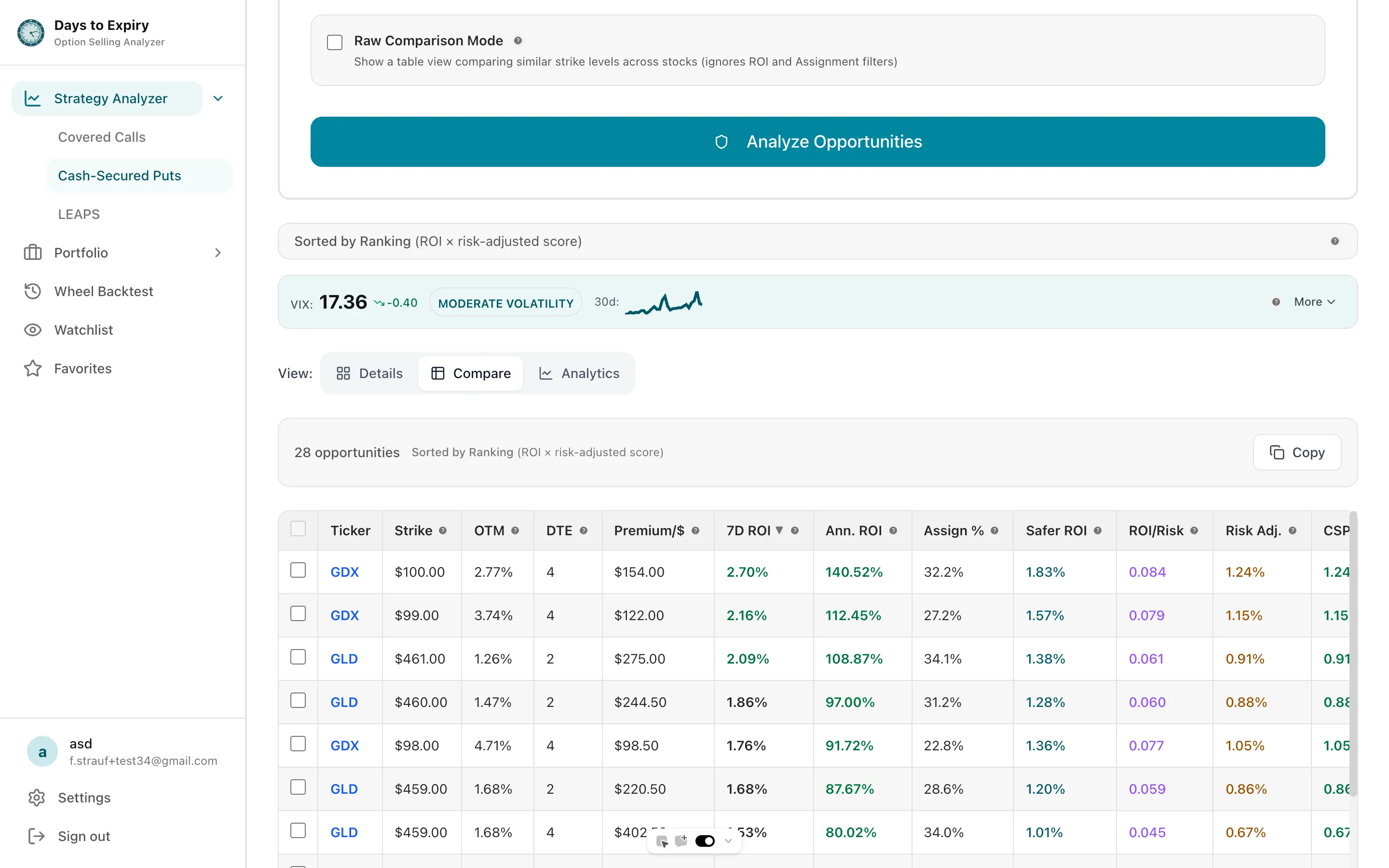
Covered call strategy comparison

Tap to view full size

Problem

Covered Call Analysis is Tedious

Multiple Strikes to Compare — 20+ strikes displayed, impossible to rank by your criteria

Max Profit Calculation is Manual — You're doing spreadsheet math to figure out profit scenarios

Downside Protection is Invisible — No easy way to see how much cushion you have if stock drops

Assignment Probability Unknown — You don't know if you'll keep your shares or if they'll be called away

Solution

Covered Call Analyzer

Max Profit Calculation

Instant best-case scenario

Downside Protection %

How much room you have if stock drops

Break-even Price

Where you lose money if stock falls

Assignment Probability

Odds your shares get called away

Annualized ROI

Year-over-year return projection

Profit Scenarios

Compare all strikes at once

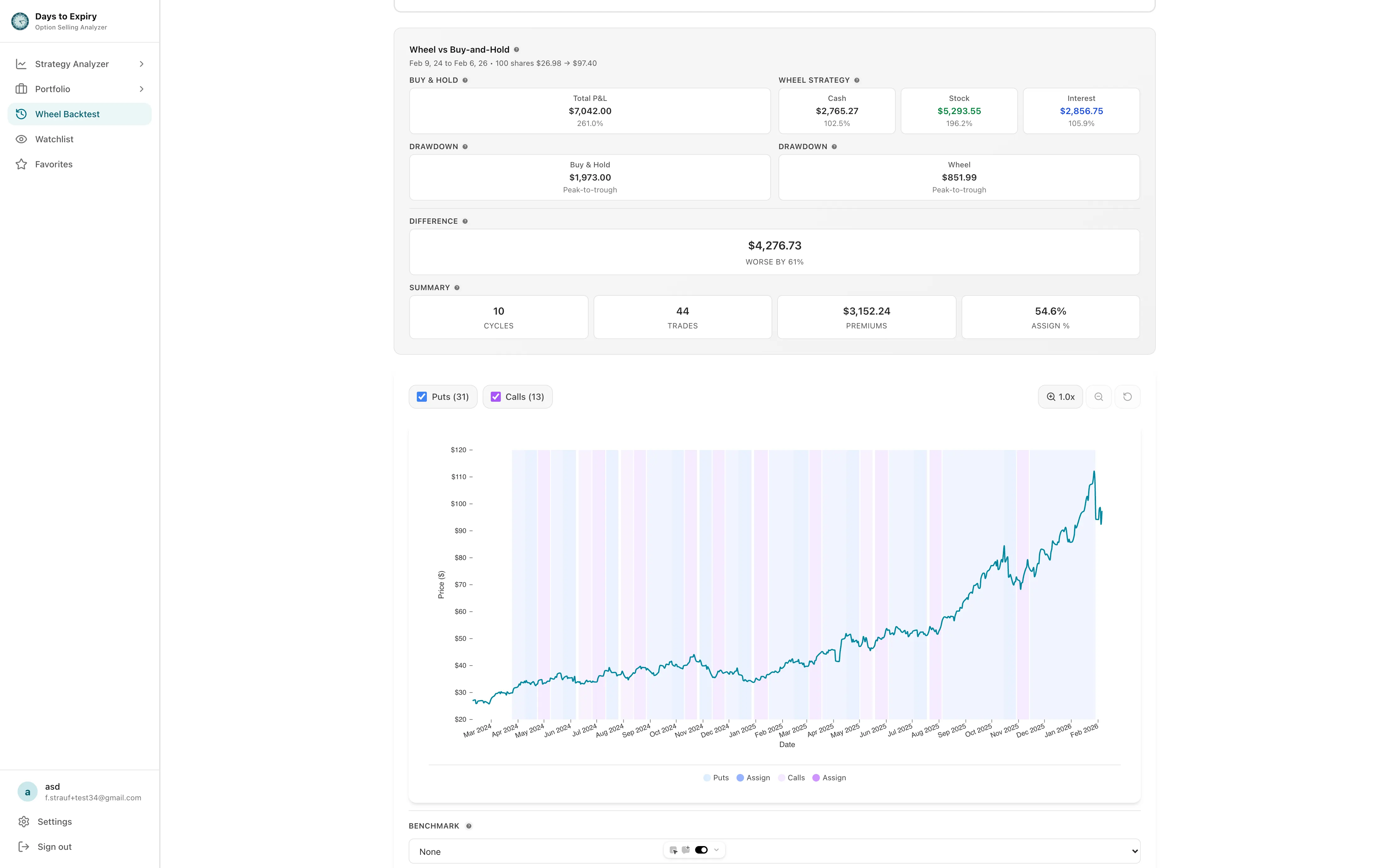
Wheel strategy backtest compared with buy-and-hold

Tap to view full size

Calculate Your Covered Call Income

Monthly Income Calculator

Estimate income from selling covered calls or cash-secured puts

Sets the delta range used when you open the Strategy Analyzer. The estimate below always uses a strike about 2% out of the money.

$430.00

Need more capital to start

Try $43,000 or switch strategies

How it works

Get started in 3 simple steps

1

Enter Your Position

Enter the ticker you own; the current price is fetched for you

2

Pick a Covered Call Strike

Scan the call chain by DTE and strike range. Each strike shows premium, return if assigned, and assignment odds

3

Compare All Scenarios

Sort strikes by annualized ROI, 7-day ROI, or assignment probability. Pick the one that matches your goals

Covered Call on MSFT (Hypothetical)

Your Position:

  • Own 100 shares of MSFT at $420
  • Current price: $432
  • 30 days to expiration, 25% implied volatility

Example Covered Call ($450 strike):

  • Premium Collected: $6.00 per share ($600 per contract)
  • Max Profit if Assigned: $3,600 ($30 capital gain × 100 + $600 premium)
  • Breakeven: $414.00 ($420 cost basis − $6.00 premium)
  • Downside Protection: 1.4% ($6.00 / $432 current price)
  • Assignment Probability: 29%
  • Annualized ROI: 16.9% (premium only: $6.00 / $432 × 365 / 30)

Hypothetical example. Premium and assignment probability are Black-Scholes estimates, not live quotes.

Key Metrics

Example: Max Profit

$3,600

Example: Downside Protection

1.4%

Example: Assignment Probability

29%

Example: Annualized ROI

16.9%

Frequently Asked Questions

Everything you need to know about getting started

What's a covered call?

You own 100 shares and sell a call option on that same stock. You collect premium upfront. If the stock rallies above your strike, your shares get called away (assigned). If it stays below, you keep the shares and repeat next month.

What's max profit on a covered call?

Max profit = (Strike Price - Purchase Price) × 100 + Premium Collected. Example: Bought at $100, selling $110 call, collect $2 premium. Max profit = $10 + $2 = $12/share = $1,200 per contract.

What's downside protection?

The percentage drop your stock can take before you lose money. Calculated as Premium Collected / Current Stock Price. Example: Stock at $100, premium collected $2, downside protection = 2%.

Should I always sell OTM covered calls?

Not always. OTM (out-of-the-money) calls have lower assignment probability but also lower premium. ATM (at-the-money) calls collect more premium but higher assignment odds. Choose based on whether you want to keep the stock.

What happens if my covered call gets assigned?

Your shares get sold at the strike price on the expiration date (or before if early assignment). You profit from the price difference + premium collected. Then you can restart with new shares or sell more puts.

Is covered call income taxed differently?

In the US, premium from a call that expires or that you buy back is a short-term capital gain, no matter how long the call was open. If the call is assigned, the premium is added to the sale proceeds of your shares, and the shares' holding period decides short- vs long-term treatment. Deep in-the-money calls can also affect that holding period. This isn't tax advice—check with a tax professional.

Ready to Get Started?

Join traders who are already using our tools to make better decisions.