Free covered call screener. Enter a ticker and see every call with annualized ROI and an assignment probability, filtered by DTE, strike range and liquidity. No account needed for up to 3 scans a day; a free account scans one stock at a time without a daily limit.
Enter a ticker and see every covered call with annualized ROI and assignment probability, filtered to your DTE and risk rules
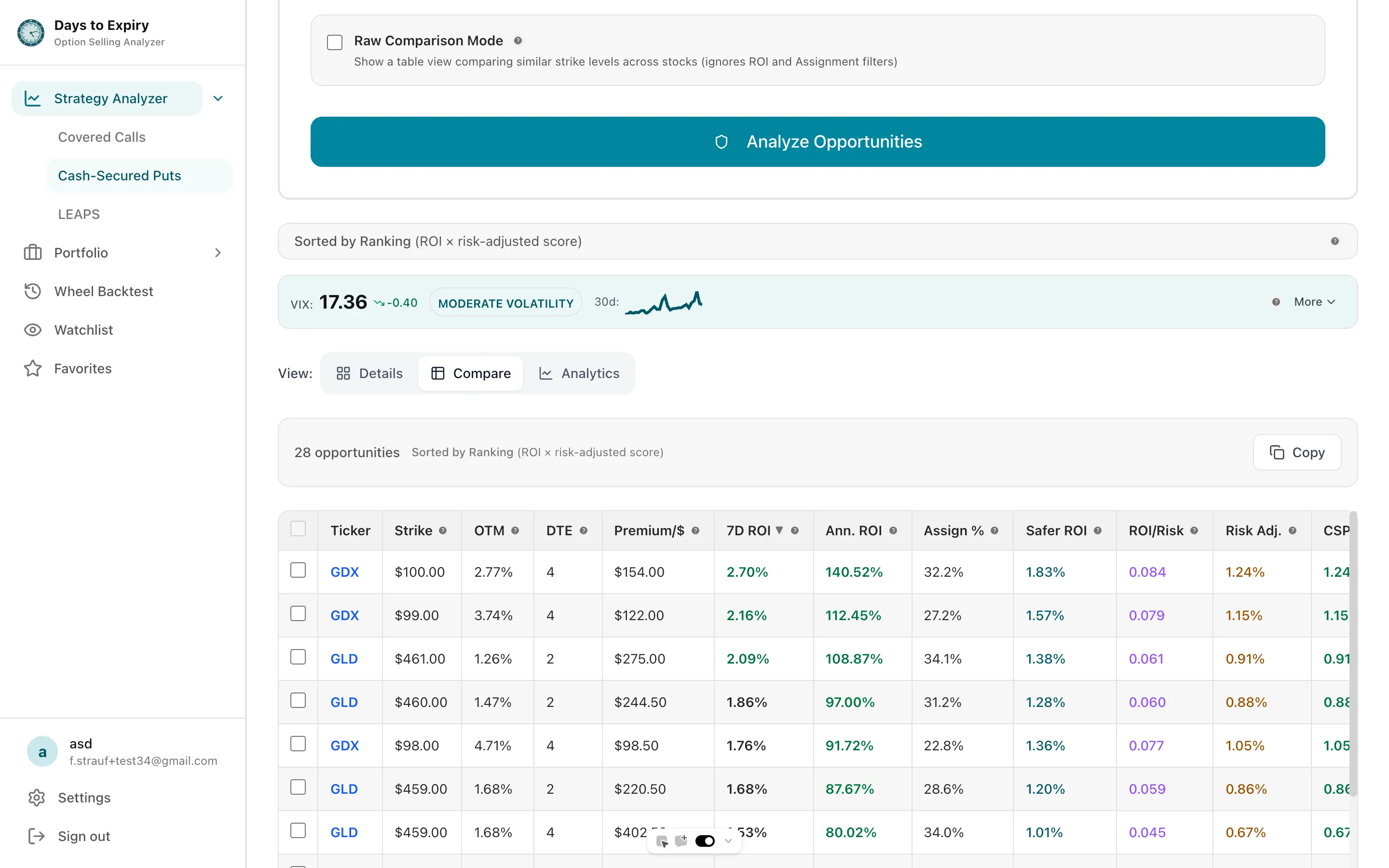
Most covered call screeners only show basic metrics—premiums, strike prices, and expiration dates. They don't tell you whether a trade is actually worth the risk. Our covered call screener puts the return and the risk on the same row: every contract shows its annualized ROI and its assignment probability, so you can compare a 7-day call against a 30-day call apples-to-apples.
Tap to view full size
No Risk Context — Premiums without the probability of your shares being called away
Manual ROI Calculations — Spending time calculating annualized returns in spreadsheets
Generic Recommendations — One-size-fits-all suggestions that ignore your strategy
Limited Analysis — No risk/reward breakdowns or P&L visualization
Every contract shows its probability of finishing in-the-money, from its market delta or a Black-Scholes estimate.
Fair comparison across different timeframes so a 30-day trade can be weighed against a 60-day trade.
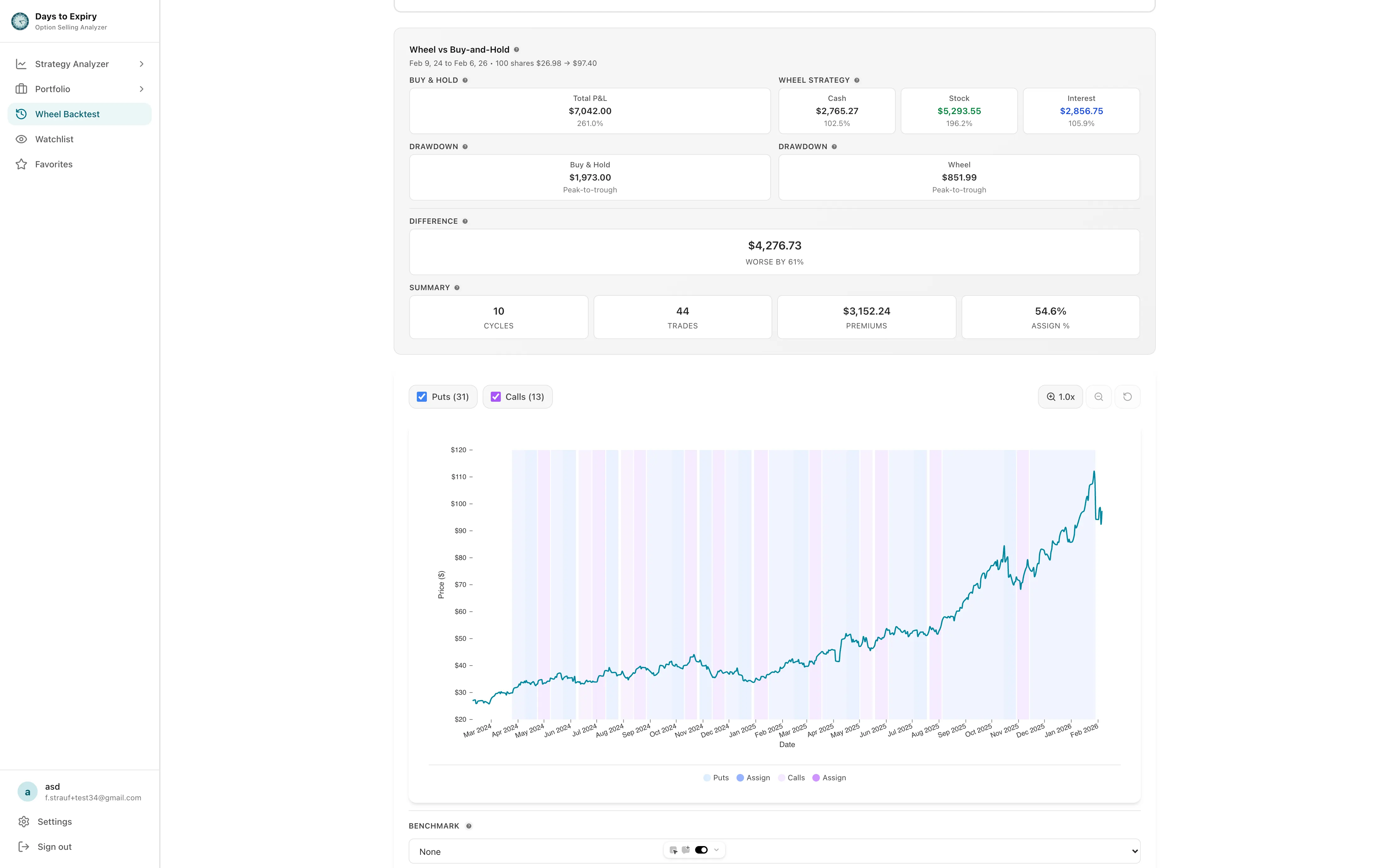
Portfolio can backtest a ticker: how often a fixed DTE and OTM% rule was assigned over the past 2 years, and what it earned.
Sort by a score that discounts 7-day ROI by assignment probability, so high-yield, high-risk calls stop topping the list.
Set DTE range, strike range (OTM/ATM/ITM), minimum and maximum assignment probability, and minimum liquidity.
Filter the results table by annualized ROI, assignment probability, IV percentile, OTM%, DTE or RSI.
Free account holders can save a scan’s tickers and filters and re-run it later.
Up to 3 scans a day with no account, unlimited single-stock scans with a free account. Portfolio adds the 2-year backtest.
Tap to view full size
Enter a ticker, then set your DTE range, strike range (OTM/ATM/ITM) and maximum assignment probability
See every matching call with premium, annualized ROI and assignment probability; sort or filter any column
Save the scan to re-run it later, or switch to the chart view to plot ROI against assignment risk
Account Needed
None
Free Scans, No Account
3 / day
Assignment Probability
Every contract
Portfolio Backtest Window
2 years
Complete wheel cycle management
Test a covered call rule against historical data
Modern alternative to premium covered call tools
Analyze individual covered call trades in detail
Track and manage your covered call positions over time
Covered call screening is the process of systematically searching through the options market to identify stocks where selling call options against shares you own can generate meaningful income. Unlike basic options screeners that simply list high-premium opportunities, a professional-grade covered call screener evaluates the risk-reward balance to help you make informed trading decisions.
The key to successful covered call writing lies in understanding the relationship between premium income and assignment risk. High premiums often signal elevated volatility or upcoming events like earnings announcements, which increase the probability of your shares being called away. Our screener shows an assignment probability for every contract, taken from the option's market delta (or a Black-Scholes estimate when no delta is available), so you can see the premium and the assignment risk side by side.
Covered calls work best as part of a comprehensive income strategy. Many traders combine them with cash-secured puts in what is known as the wheel strategy, creating a continuous cycle of premium collection. When your covered call is assigned, you can immediately begin selling cash-secured puts to potentially reacquire the shares at a lower price.
For traders with limited capital, the poor man's covered call strategy using LEAPS as a stock substitute can provide similar income potential with reduced capital requirements. The screener's LEAPS tab can help you find the long leg; the covered call tab covers the short call.
Understanding the tax implications of covered call writing is essential for accurate return calculations. Premiums received are generally treated as short-term capital gains, while assignment can trigger long-term gains if you've held the underlying shares for over a year. Our covered call tax rules guide provides detailed information on wash sale rules, qualified covered calls, and reporting requirements.
One of the most important decisions in covered call management is whether to roll a position approaching expiration or allow assignment. Scanning the next expirations shows what a roll would pay, but understanding the mechanics is crucial. Read our rolling covered calls strategy guide to learn when rolling makes sense and when it's better to let the shares go.
Everything you need to know about getting started