
Why the Wheel Is the Most Rational, Most Human Options Strategy
Most investors place limit orders and get paid nothing for doing so.
The Wheel Strategy asks a simple question:
“If I’m committing capital to buy or sell something at a specific price, why shouldn’t I get paid for that commitment?”
To understand this intuitively, let’s use a story that mirrors how real businesses operate — because options are fundamentally commercial contracts.
 white ceramic teapot on brown wooden table
A Realistic Analogy: How a Shopowner Uses Options Without Knowing It
Imagine you own a small teaware shop.
You want to stock a specific style of teapot, currently selling for 165 yuan in the local market. You tell independent stall vendors (“suppliers”):
“If the price of this teapot ever falls to 150 yuan,
I’m willing to buy any unit you’re trying to offload at 150.
But for that guarantee,
you pay me 5 yuan today.”
Why would a supplier pay you?
Because you’re offering downside protection — they know that if market prices soften, you’re guaranteed to buy from them at 150. That certainty has value, so they compensate you upfront.
What happens next?
- If market price stays above 150
No supplier comes back.
You simply keep the 5 yuan for offering the guarantee. - If price drops below 150
A supplier returns:
“Market is now 145. As agreed, you will buy from me at 150.”
You buy it at 150 — and still keep the 5 yuan.
This is selling a cash-secured put:
You get paid to potentially buy something you already want to own.
 black and white wooden cabinet
Now imagine you have inventory — you bought some teapots at your target price.
So you announce to traders at the market:
“If the teapot price rises to 180 within the next week,
I’m willing to sell any inventory at 180.
If you want the right to buy at 180,
pay me 5 yuan now.”
This is selling a covered call.
Again, two outcomes:
- If price never reaches 180
No one exercises the right.
You keep the inventory AND the 5 yuan. - If price rises above 180
A trader returns:
“Market is 190 now, but I bought the right to buy at 180.”
You sell at 180 — and keep the premium.
This is the Wheel Strategy:
Get paid to buy inventory,
get paid to carry inventory,
get paid to sell inventory.
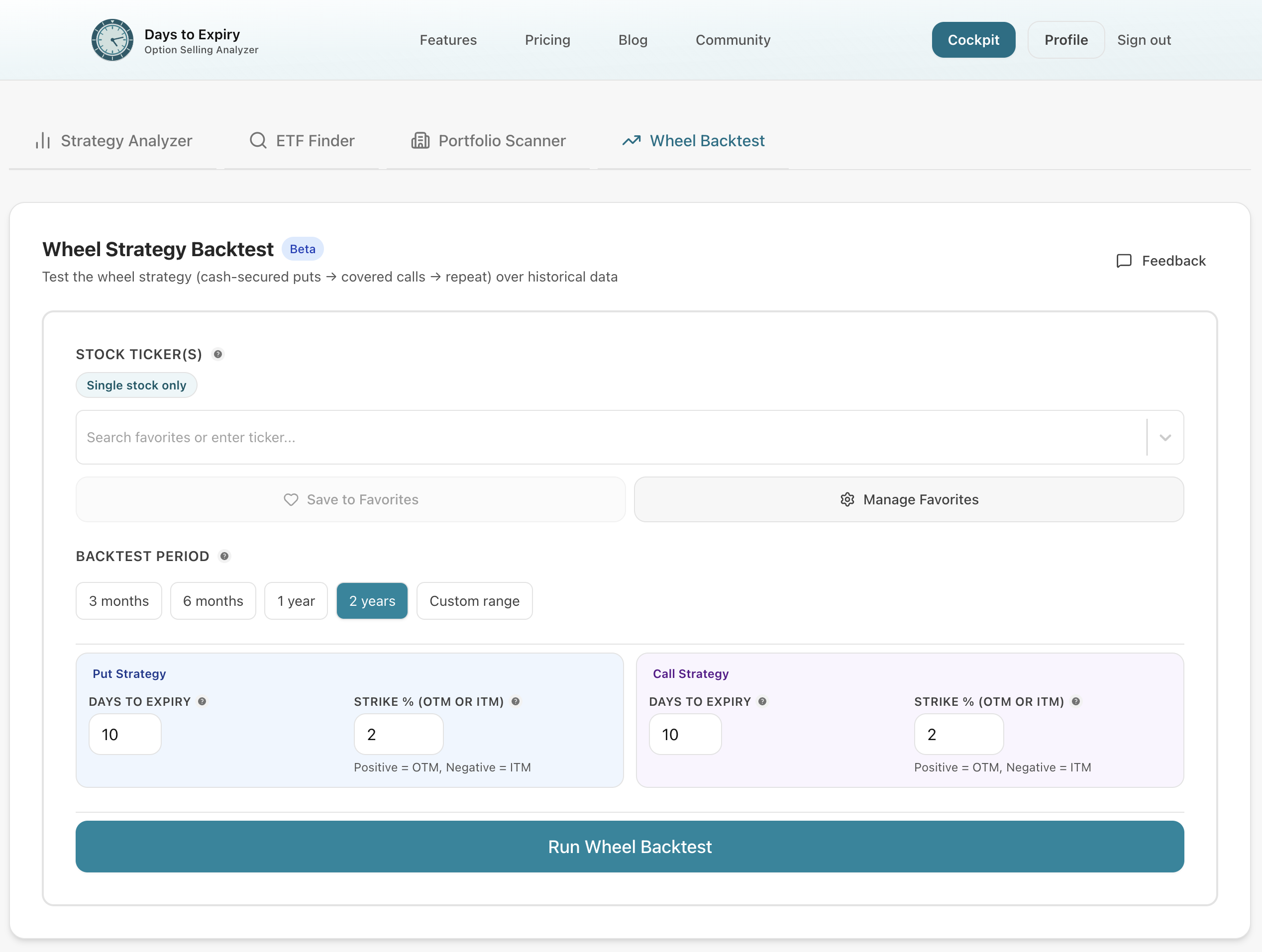
Head over to DaysToExpiry for some back-testing fun
It’s just business — applied to markets. Of course, as with all business there is risk involved. You could have an earthquake which is bad for ceramics, or everyone might decide to drink coffee instead of tea going forward. There is always a risk that what you hold for the long term declines in value or goes to 0. Think Enron, Kodak or Motorola.
Why the Wheel Works (The Strategic “Whys”)
 white and black heart print card
1. It Lowers Drawdowns vs Buy-and-Hold
Every premium you collect reduces your cost basis.
Lower cost basis = smaller drawdowns during dips + faster recovery.
2. It Generates Cashflow That Earns Interest
Wheel traders earn:
- Put premium
- Call premium
- Interest on idle cash
This creates multi-layered yield, especially valuable in high-rate environments.
3. It Is Literally a Limit Order That Pays You to Wait
Limit order at 150 = no income
Cash-secured put at 150 = premium income while waiting
Over time, this compounds into a meaningful edge.
4. It Is Emotionally Anti-fragile
You automate:
- your buy price
- your sell price
- your timeframe
No FOMO, no panic, no guessing.
5. It Thrives in Sideways Markets
Most strategies fail when markets chop.
The Wheel makes its best returns in these conditions.
 selective focus photography of an arrow
Learning Outcomes
By the end of this lesson, you should be able to:
- Explain the Wheel Strategy simply and accurately.
- Select appropriate tickers for Wheel trading.
- Choose put and call strikes.
- Manage assignment and rolling intelligently.
- Avoid the major pitfalls beginners fall into.
- Calculate expected returns of a Wheel cycle.
Lesson Content
1. What the Wheel Strategy Is
The Wheel has two legs (read the pre-read for this lesson here):
Step 1: Sell Cash-Secured Puts (Get Paid to Enter)
- Pick a stock you’re happy to own.
- Sell a put at the price you’d like to buy.
- If assigned → you own the stock.
- If not assigned → keep premium and sell another put.
Step 2: Sell Covered Calls (Get Paid to Exit)
- Once assigned, sell calls on your new shares.
- If called away → you exit at a profit + premium.
- If not → keep premium and sell another call.
Rinse and repeat.
It’s the most straightforward income wheel in options.
2. Ticker Selection: It Does NOT Have to Be Boring
 graphical user interface, application
Great Wheel tickers share these traits:
- Healthy liquidity (both on the underlying as well as the option)
- Strong long-term fundamentals (you are happy to buy and hold, think Warren Buffet type investments)
- Good option volume
- Preferably moderate-to-high IV
- Price that fits your position sizing (100-share units)
Category A: Blue-Chip Workhorses (Low Stress, Lower Premiums)
Moderate premium, high reliability
AAPL
MSFT
KO
COST
JPM
XOM
Category B: Cyclical Cash Machines
Higher yields, still fundamentally strong
GM
MAR
DAL
WHR
PBR
Category C: High-Quality High-IV Tech / China Tech
Great for a dynamic wheel, higher premium
AMD
NVDA
TSM
PLTR
BABA
PDD
Category D: Commodity / Macro Plays (What I gravitate to)
High IV, real cashflow, geopolitical angles
CCJ
FCX
SILJ
GDX
SLB
3. How to Select the Right Strikes
Selling Puts (Entry Leg)
Rule of thumb:
Sell the strike where you’re genuinely happy to buy and hold for 1–2 years or even longer. Remember, if done properly, assignments are wins and not something to be avoided.
 grayscale photo of man using magnifying glass
Remember, it should not surprise you if some of your tickers are still with you when you retire :)
Guidelines:
-
Prefer OTM puts with strong support beneath
-
Avoid earnings unless premiums are irresistible
-
Target:
- 1%+ monthly for blue chips
- 2–3% monthly for high-IV names
You get paid while waiting for dips.
If no dip comes, you still get paid.
Advanced: Selling an ITM put !! if you believe the trend is strong and you want to get assigned for a discount + take part in any underlying upside.
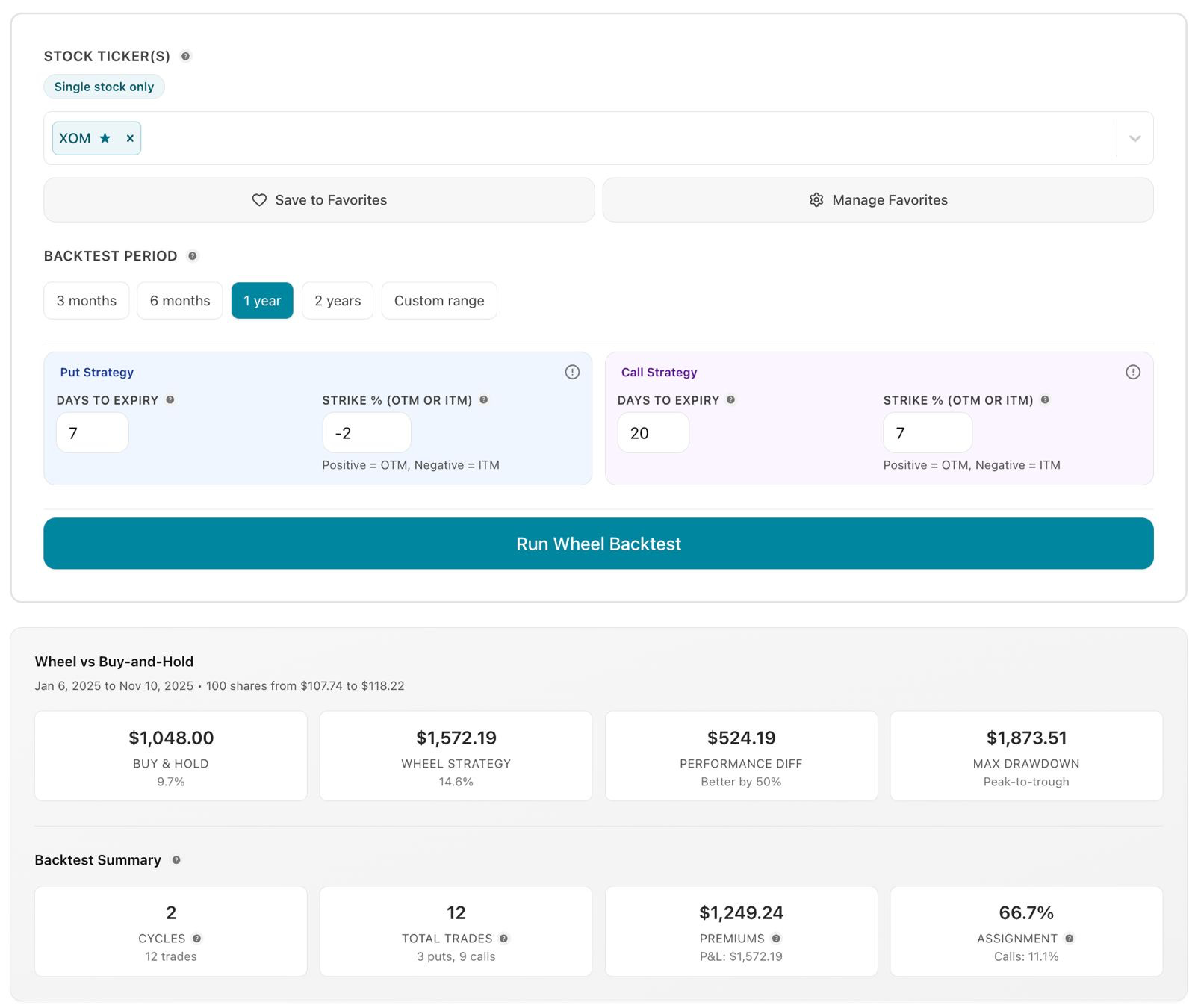
I am looking at Exxon, and thinking of selling ITM puts to get into the trade, with longer times on the call side of the wheel to allow capital appreciation.
Selling Calls (Exit Leg)
Rule of thumb:
Sell calls at the price you’d be proud to take profit.
Guidelines:
- OTM for safety
- Avoid strikes below cost basis
- Target resistance areas or your intended exit price
- Monitor upcoming catalysts
Covered calls let you turn dead time into cashflow.
4. Risk Management
- Use 100-share sizing discipline
Don’t wheel stocks where 100 shares is too large a % of your portfolio. - Avoid existentially risky companies
No meme stocks, no scams, no companies on bankruptcy watch. I like ETFs for liquidity and low chances of going to 0. - Roll carefully
Roll puts when the strike is breached.
Roll calls when IV collapses or you want to avoid assignment. - Accept assignment proudly
If you chose the ticker well, assignment is a win.
5. A Complete Example: The AMD Wheel
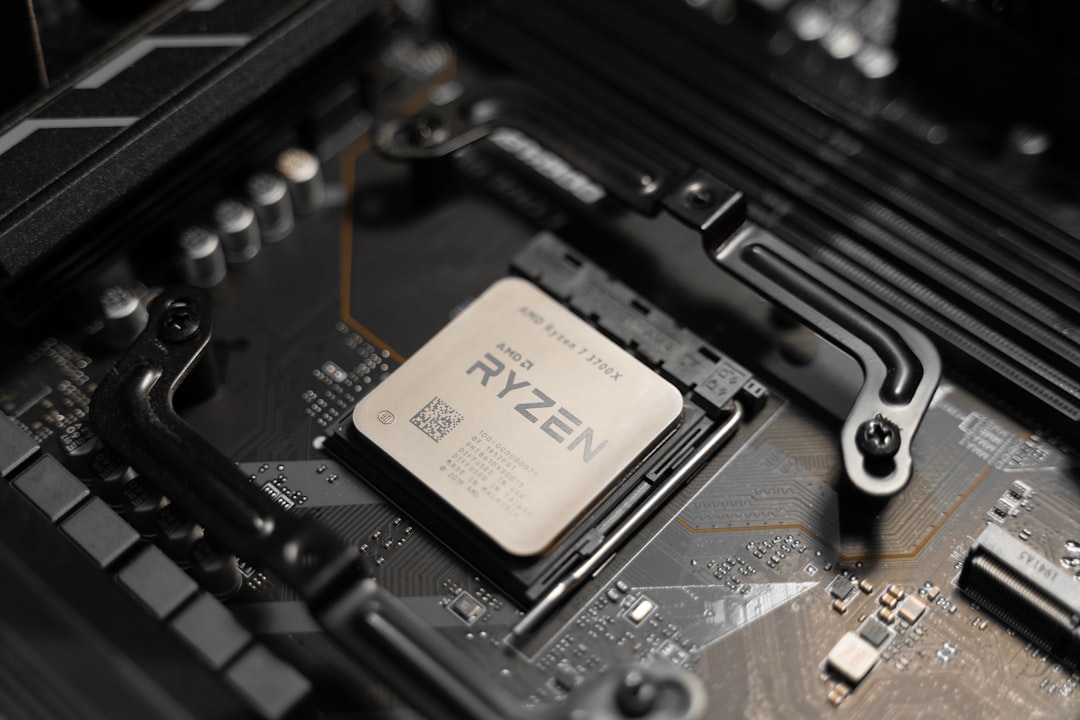 black and gray computer hard disk drive
AMD trades at 105 in May 2025.
Put Leg
Sell the 95 put for 2.30 (Using approximate’s data. For updated data visit our website www.daystoexpiry.com)
Return: ~2.4% for the month.
If not assigned: repeat.
If assigned: cost basis = 95 – 2.30 = 92.70.
Call Leg
Sell the 110 call for 1.80.
If called away:
- Gain: $92.70 → $110
- Plus premiums
Total return ~20%.
Not bad, depending on how long it takes to play out. In this historical example, it took about a month! Talk about volatility :)
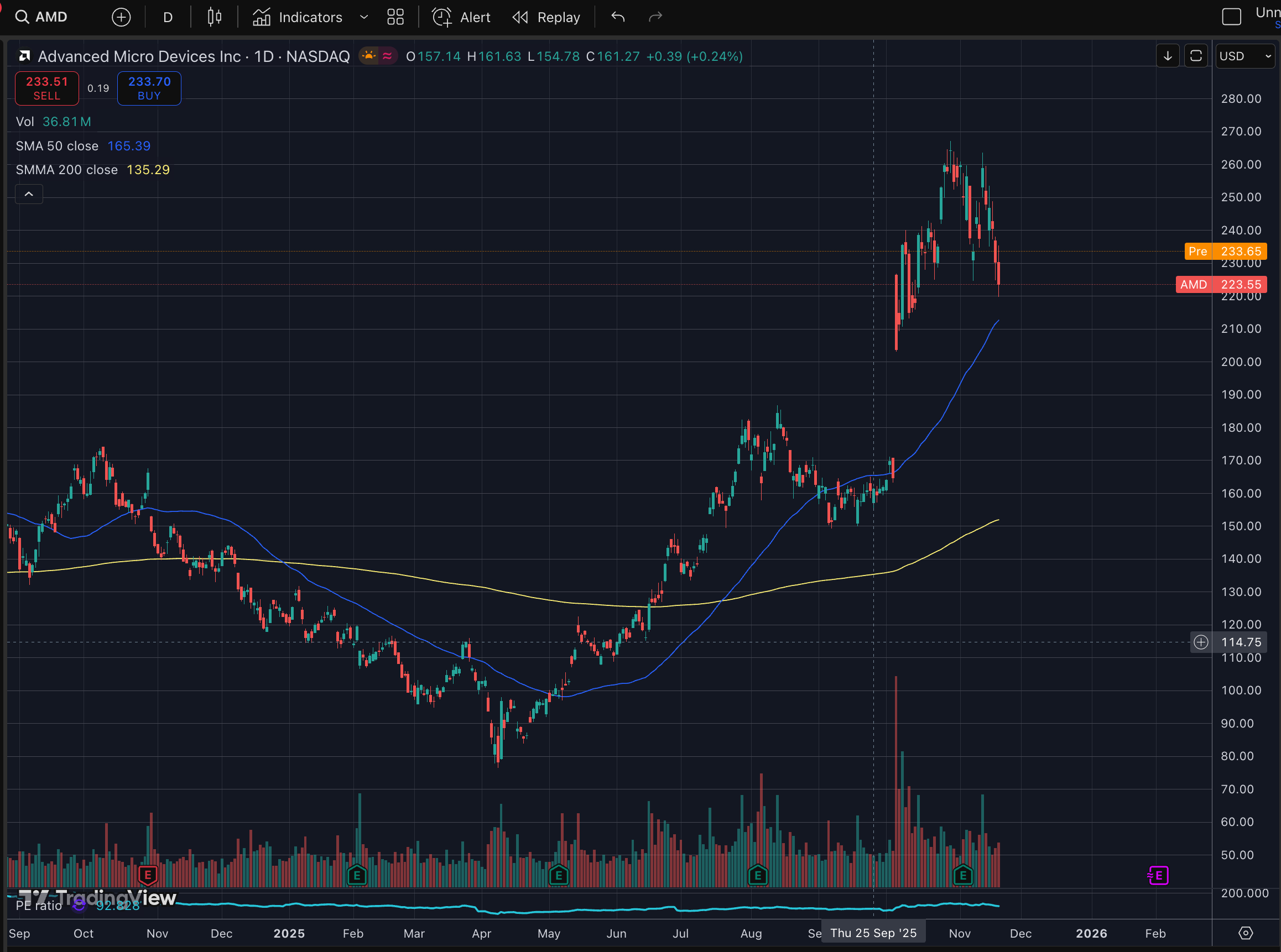
The premiums offer buffer when the trade is working against you, but adds to returns if the trend ends up being your friend.
Jumping online to see current ROIs for AMD:
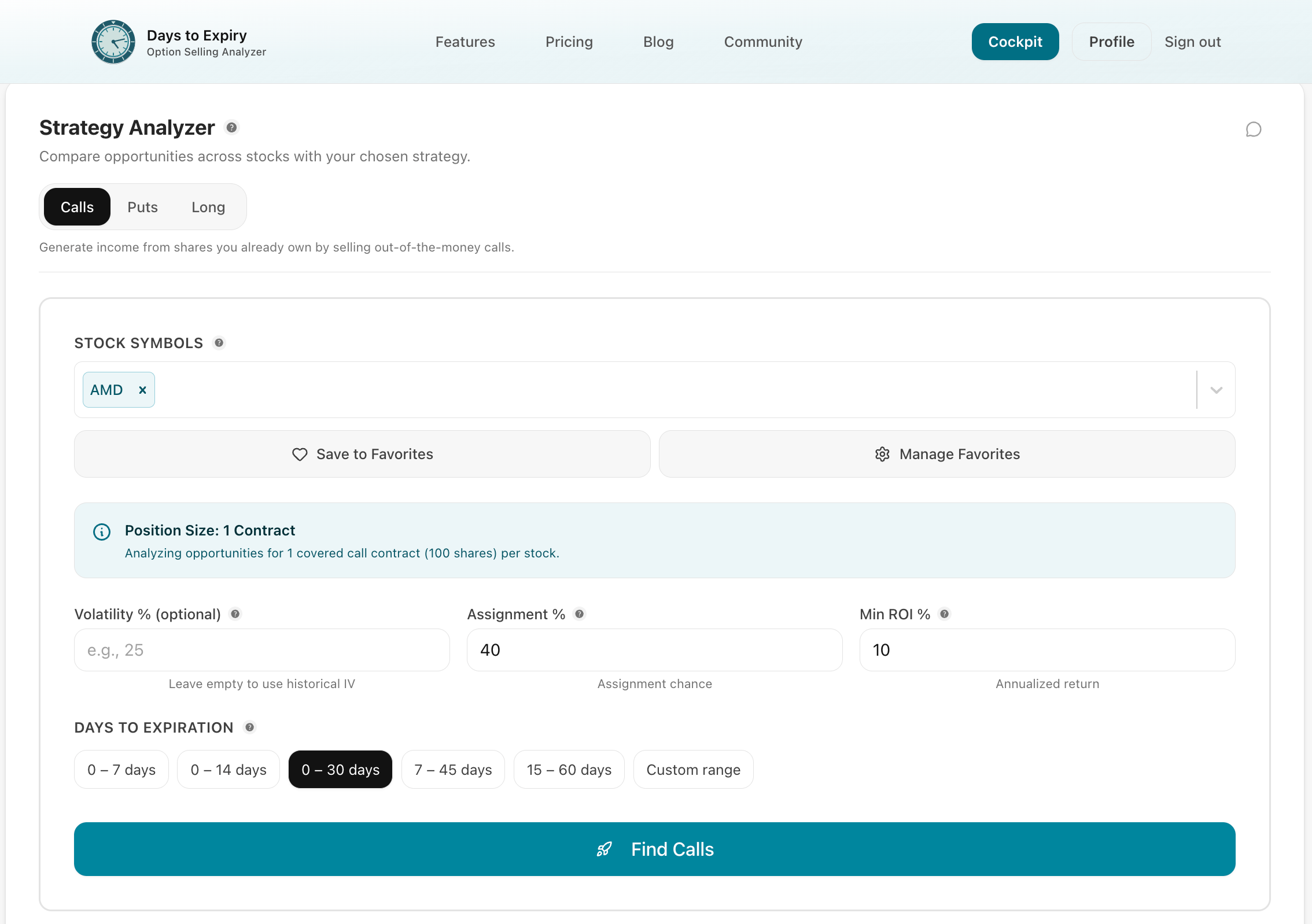
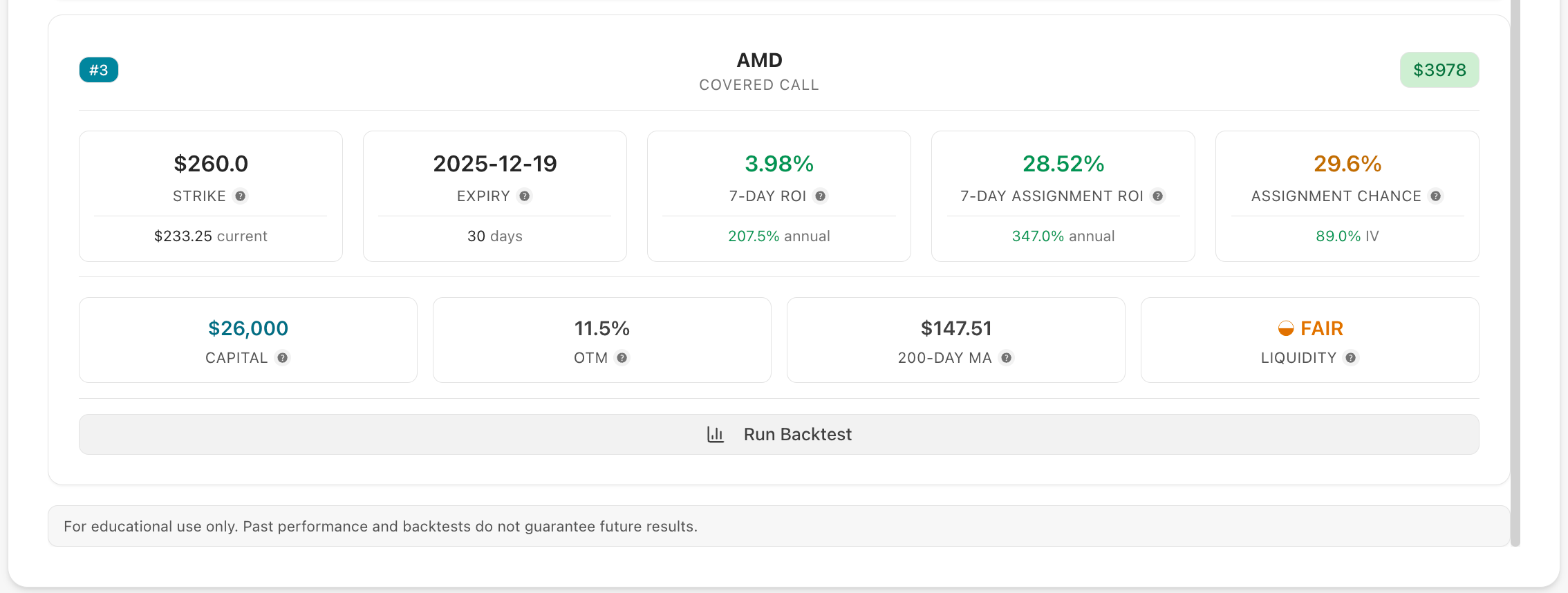
Amazing ROI. To queue to sell a stock within 30 days for an 11.5% profit.
6. Common Mistakes (avoid like the plague)
- Selling puts on stocks you’d never own
- Selling calls too close to ATM and losing shares early
- Running the wheel through earnings blindly
- Wheeling low-quality, hype-driven stocks
- Oversizing positions
- Using margin irresponsibly
 photo of red and white bike tire
Conclusion
The Wheel turns market uncertainty into structured, repeatable cashflow by paying you to enter, hold, and exit — like a rational shop owner running inventory. Keep your edge by choosing quality tickers, sizing to 100‑share units, and letting premiums steadily lower your cost basis while you avoid earnings landmines and hype.
Your next step is simple: define buy and sell levels you’re proud of, then automate them with cash‑secured puts and covered calls. Practice deliberately, track outcomes, and let the multi‑layered yield compound. Even you like, try out our own wheel backtesting tool designed for this purpose. Play around with days to expiries and in/out of the moneyness.
To deepen your mastery, subscribe to my course for access to our quizzes that test your knowledge with realistic examples and step‑by‑step scenarios. It’s the fastest way to pressure‑test your decisions before real capital is on the line.